Halogen Leak Detector Explained: A UK Buyer's Guide
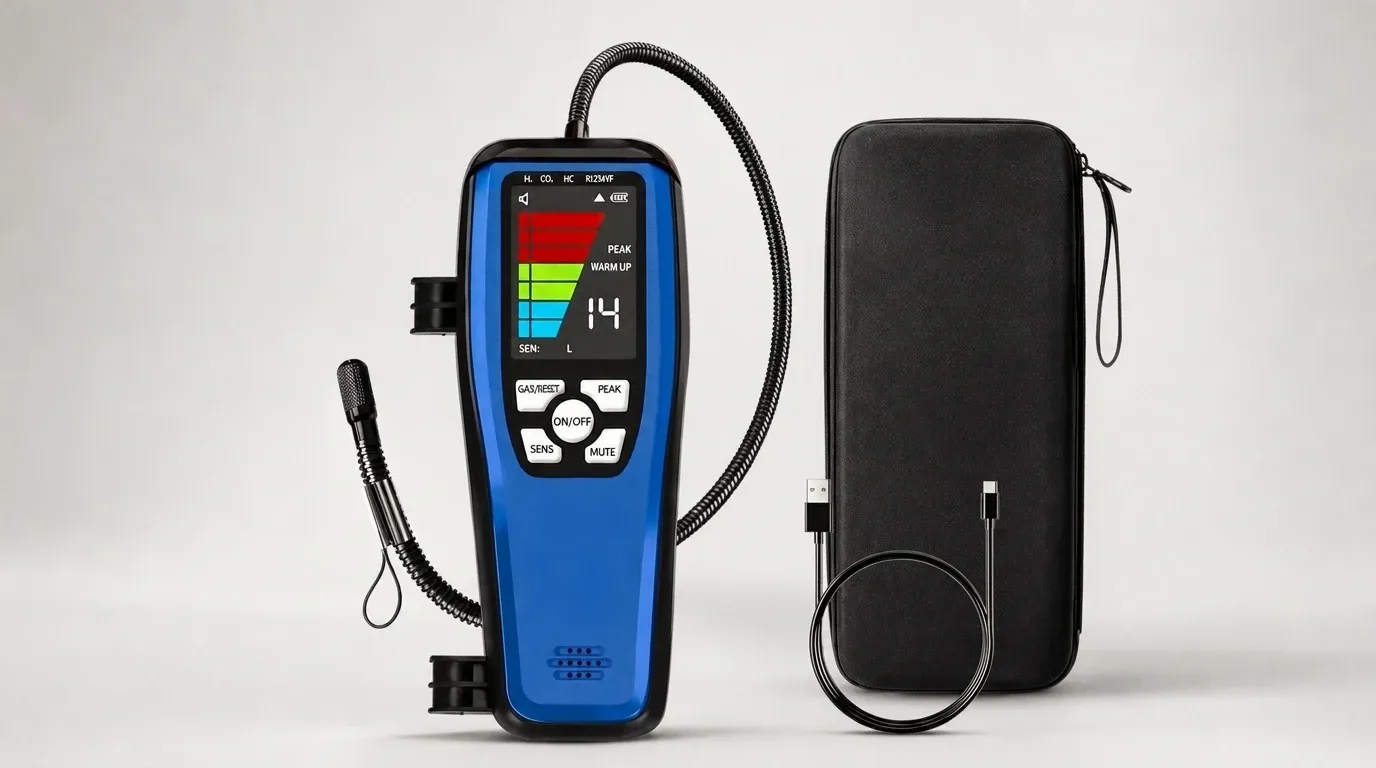
Short answer: "halogen leak detector" is a broad label for tools that find halogenated refrigerants (the ones containing chlorine or fluorine). In practice it often means older corona-discharge or halide-flame detectors, which are sensitive but prone to false alarms and are not safe to use near mildly flammable A2L refrigerants. For most UK work today, a heated diode detector is the more sensible halogen-sensing choice.
If you have been let down by a basic beeper that only speeds up its beeping and never tells you whether you are getting closer to the leak, you are asking the right questions: what does the sensor actually do, what is the minimum leak rate, and is the screen genuine diagnostic value or just packaging? This guide answers them without the marketing gloss.
What is a halogen leak detector, really?
Strictly, a halogen leak detector is any instrument that detects halogen gases. Three electronic sensing technologies dominate, and the differences matter.
Corona discharge (the classic "halogen" detector)
A corona-discharge sensor creates a high-voltage electrical field between two electrodes; when a refrigerant molecule disrupts that field, the current changes and the alarm sounds. It is very sensitive and cheap, but it triggers on many gases so it is prone to false alarms, its sensor life can be very short, and, most importantly, the high-voltage spark makes it the wrong and unsafe tool near A2L refrigerants such as R32 and R454B.
Heated diode
A heated diode pulls sampled air over a ceramic element heated to a high temperature (over 500°C). The heat breaks apart the halogenated refrigerant molecules, creating ions that change the current through the diode and trigger the alarm. It is the everyday industry standard because it is sensitive to HFCs, HCFCs and HFOs, is far less prone to false alarms than corona, and, because it is not spark-based, it suits mildly flammable A2L gases. The trade-off is honest: the sensor is a consumable and needs periodic replacement.
Infrared
An infrared sensor reads a refrigerant's infrared absorption signature. It has a very long sensor life and is immune to false alarms, but it costs more up front. If you want to see where each of these fits into everyday work, our HVAC leak detector guide covers the fundamentals.
Why A2L refrigerants change the decision
R32 and R454B are mildly flammable A2L gases, and they are now common on UK AC and heat pump work. A spark-based corona "halogen" detector is not an appropriate tool around them. The safe options are intrinsically safe designs: modern heated diode or infrared. A heated diode detector such as the Aprvtio ALD-200 avoids the spark issue while keeping the sensitivity you need.
How to judge sensitivity and value like a sceptic
This is where a careful buyer earns their money. The UK benchmark is BS EN 14624:2020, which sets a minimum sensitivity of 5 grams per year (measured on R134a) for a portable locating detector. Two practical points follow.
- Ask for the number. If a listing does not publish a minimum leak rate, ask the seller before you buy, and be wary of "premium-grade" claims with no figure behind them.
- Verify it yourself. The most convincing test is to run the detector side by side against your existing kit on a known reference leak, and see which repeatably flags the same small leak. A 30-day returns window is what makes that possible.
A screen earns its place if it shows a changing concentration rather than a single beep, because that is what lets you track towards a leak and record what you found. For that field workflow in detail, see our refrigerant gas sniffer guide.
Sensor life and running cost
Heated diode sensors are consumables. That is a fact, not a flaw, so plan for it: note when sensitivity starts to drop, check the tool against a reference leak, and keep a replacement sensor to hand so a worn tip never scuppers a job. Factoring the sensor into the running cost is how an experienced engineer compares a mid-priced tool against a more expensive one fairly.
The Aprvtio ALD-200: a heated-diode alternative to a halogen leak detector
If you want to trial a heated-diode detector against your current kit, the Aprvtio ALD-200 is built to be tested. It uses heated diode sensing (so it is not the spark-based corona type), supports R32, R454B, R410A and R134a, and shows a reading on a 2.8-inch display rather than only beeping. A 16-inch flexible probe reaches behind commercial units where a short rigid probe cannot, and a 3000 mAh rechargeable battery runs up to around 10 hours. Aprvtio states the heated diode tip has an active life of roughly 100 to 200 hours and sells replacement sensors, so you can plan running cost honestly. It is £128.99 inc. VAT (£107.49 ex. VAT), rated 4.7 out of 5 from 285 reviews, and comes with a 12-month UK warranty and 30-day returns so you can run your own repeatability check. Note the minimum leak rate is not published, so ask Aprvtio for it if that figure is decisive for you.
Run a heated-diode detector through your own repeatability test
View the Aprvtio ALD-200 — £128.99Frequently asked questions
Is a halogen leak detector safe to use with R32 and other A2L refrigerants?
A traditional corona-discharge halogen detector is not, because it works by creating a high-voltage spark, which is a risk around mildly flammable A2L gases such as R32 and R454B. Choose an intrinsically safe type instead, such as a modern heated diode or infrared detector.
What is the difference between a halogen leak detector and a heated diode detector?
Halogen detectors are the broad category for finding chlorine- and fluorine-based refrigerants, and the term often refers to corona-discharge units. A heated diode is one specific, spark-free sensor within that category: it heats sampled air to ionise the refrigerant, is less prone to false alarms and suits A2L work, but its sensor is a consumable.
What minimum leak rate should a refrigerant leak detector meet in the UK?
BS EN 14624:2020 sets a minimum sensitivity of 5 grams per year, measured on R134a, for portable locating detectors. If a product does not publish its minimum leak rate, ask the seller, and verify performance against a known reference leak within your returns window.
How often do heated diode sensors need replacing?
Heated diode tips are consumables and lose sensitivity with use, so they need periodic replacement and regular checks against a reference leak. Aprvtio states the ALD-200 tip has an active life of roughly 100 to 200 hours, and replacement sensors are available, so you can budget the running cost.
Ready to upgrade your diagnostics with Aprvtio?
Shop Detectors — £128.99