Free UK Next-Day Delivery on All Orders | 2-Year UK Warranty

Refrigerant Gas Sniffer Explained: A UK Buyer's Guide
Refrigerant Gas Sniffer Explained: A UK Buyer's Guide
By Chloe E.2026-07-2110 min read

For HVAC professionals operating across the UK, an undetected refrigerant leak is more than just a minor inconvenience; it is a critical failure that compromises system efficiency, harms the environment, and breaches strict regulatory compliance. As the industry transitions towards lower-GWP (Global Warming Potential) and mildly flammable A2L refrigerants like R32, the tools required for servicing these systems must evolve. At the forefront of this evolution is the refrigerant gas sniffer.

A high-quality refrigerant gas sniffer is the definitive tool for pinpointing microscopic leaks in complex pipework, evaporator coils, and condenser units. Whether you are servicing a sprawling commercial VRF system in a London office block or installing a domestic air source heat pump, relying on outdated methods like soap bubbles or fluorescent dyes is no longer sufficient. Modern engineers require precision, speed, and reliability.

Key Takeaways

  • Regulatory Compliance: Using a precise refrigerant gas sniffer ensures adherence to stringent UK F-Gas regulations, preventing costly fines and environmental damage.
  • Advanced Technology: Heated diode sensors offer superior sensitivity and fewer false alarms compared to traditional corona discharge models.
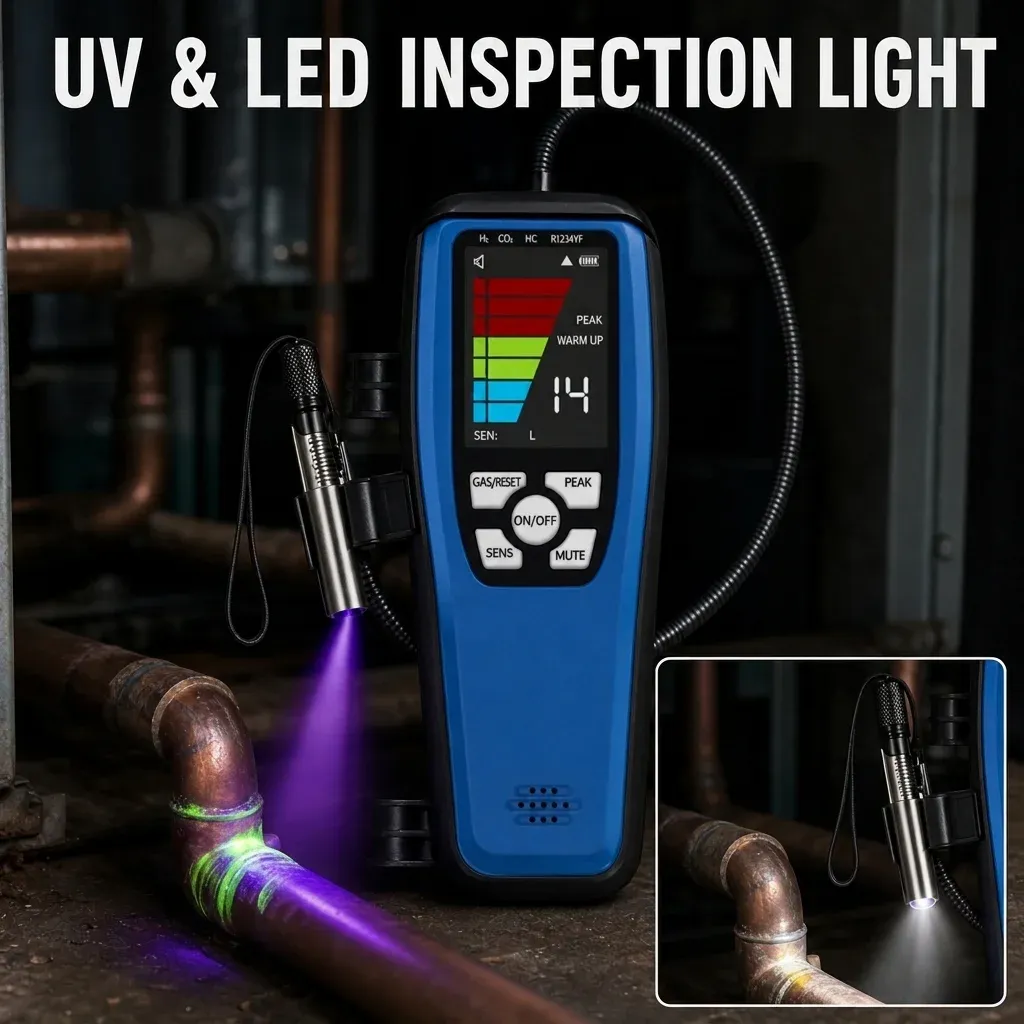
  • Essential Features: A 16-inch flexible probe and a clear 2.8-inch display are critical for navigating tight plant rooms and poorly lit spaces.
  • Financial Savings: Pinpointing leaks instantly minimises refrigerant loss, saving clients money on expensive top-ups and reducing compressor wear.

What is a Refrigerant Gas Sniffer?

A refrigerant gas sniffer—often referred to simply as an electronic leak detector—is a handheld diagnostic device engineered to detect the presence of halogenated gases in the atmosphere. When a refrigeration or air conditioning system develops a micro-fracture, a poorly seated flare joint, or a degraded seal, the pressurised refrigerant escapes into the ambient air as a vapour.

The sniffer operates by drawing this ambient air across a highly sensitive internal sensor. When the sensor detects the specific chemical signature of a refrigerant (such as HFCs, HCFCs, CFCs, or HFO blends), it triggers an escalating audio and visual alarm. The closer the probe gets to the source of the leak, the higher the concentration of gas, and the more intense the alarm becomes. This allows the engineer to trace the invisible gas back to its exact origin.

For a broader overview of leak detection equipment across the industry, you can consult our ultimate guide to HVAC leak detectors in the UK, which covers the full spectrum of diagnostic tools available to modern engineers.

Why UK HVAC Professionals Need a Reliable Sniffer

In the United Kingdom, the handling of refrigerants is heavily regulated. The UK F-Gas Regulations (retained from EU law following Brexit) place strict legal obligations on operators and contractors to prevent, detect, and repair leaks of fluorinated greenhouse gases.

Environmental and Legal Obligations

Refrigerant gases possess a Global Warming Potential that can be thousands of times greater than carbon dioxide. Releasing these gases into the atmosphere is a severe environmental offence. UK law mandates that any system containing F-gases equivalent to 5 tonnes of CO2 or more must undergo regular, mandatory leak checks by a REFCOM-certified engineer.

"According to the UK Department for Environment, Food & Rural Affairs (DEFRA), fluorinated greenhouse gases account for approximately 2% of the UK’s total greenhouse gas emissions. Mandatory leak detection and swift repair are critical pillars of the UK's strategy to meet its net-zero targets by 2050."

Failing to identify a leak not only harms the environment but can lead to severe financial penalties for both the contractor and the end-user. A highly sensitive refrigerant gas sniffer is the primary line of defence in maintaining the integrity of these F-Gas logbooks.

System Efficiency and Client Costs

Even a microscopic leak of 3 to 4 grams per year will eventually degrade system performance. As the refrigerant charge drops, the compressor must work harder to achieve the desired cooling or heating load. This results in skyrocketing electricity bills, reduced cooling capacity, and eventually, catastrophic compressor failure. By using a precise sniffer, engineers can locate and repair these faults before they necessitate a complete and costly system overhaul.

How Does a Refrigerant Gas Sniffer Work? The Technology Explained

Not all refrigerant gas sniffers are created equal. The efficacy of the device relies entirely on the sensor technology housed within the unit. While older models relied on corona discharge sensors, modern high-end sniffers utilise advanced heated diode technology.

Heated Diode Technology

Heated diode sensors are widely considered the gold standard for portable refrigerant gas sniffers. Inside the sensor, a ceramic element is heated to a very high temperature. When a halogenated refrigerant gas is drawn into the sensor chamber and contacts the heated ceramic, the gas molecules are broken apart. This chemical reaction alters the electrical current flowing through the diode.

The device's internal microprocessor measures this change in current. The larger the concentration of refrigerant, the greater the change in current, which translates to a stronger alarm signal on the device. Heated diode sniffers are incredibly precise, capable of detecting leaks as small as 4 grams per year. Furthermore, they are far less susceptible to false alarms triggered by moisture, wind, or background chemicals (like WD-40 or cleaning solvents) compared to older technologies.

To understand how this technology compares to other detection methods, read our comprehensive halogen leak detector guide.

Key Features to Look for in a Premium Refrigerant Gas Sniffer

When investing in a refrigerant gas sniffer, UK HVAC professionals must look beyond basic functionality. The physical design and user interface of the tool dramatically impact its usability in the field.

1. The 16-Inch Flexible Probe

HVAC pipework is rarely installed with the service engineer in mind. Pipe runs are often hidden behind ceiling voids, tucked behind structural beams, or buried deep within tightly packed condenser units. A 16-inch flexible probe is essential. It allows the engineer to bend and shape the detection wand to reach around corners, behind Schrader valves, and deep into evaporator coils without having to dismantle the entire chassis of the air conditioning unit.

2. The 2.8-Inch Digital Display

Audible alarms are standard, but plant rooms and construction sites are often incredibly noisy environments. Relying solely on a beep is a recipe for missed leaks. A bright, high-resolution 2.8-inch display provides vital visual feedback. It allows the engineer to see the exact concentration levels of the gas, the current sensitivity setting, and battery life at a glance, even in poorly lit environments.

3. Adjustable Sensitivity Levels

When you first enter a plant room with a massive leak, the background concentration of refrigerant might be so high that a sensitive sniffer will alarm constantly, regardless of where you point it. A premium sniffer allows you to adjust the sensitivity (e.g., High, Medium, Low). You start on low sensitivity to find the general area of the leak, clear the ambient air, and then switch to high sensitivity to pinpoint the exact micro-fracture on a specific joint.

If you are dealing primarily with AC systems, you can find more targeted advice in our air conditioning leak detector guide.

Best Practices for Using a Refrigerant Gas Sniffer

Owning a high-end refrigerant gas sniffer is only half the battle; knowing how to use it correctly is what separates novice technicians from seasoned professionals. Follow these best practices to ensure accurate leak pinpointing:

  1. Check for Draughts: Refrigerant gases are easily dispersed by wind. Before using your sniffer, turn off any local extraction fans, close doors, and ensure the area is as still as possible. If working outdoors on a condenser unit, try to shield the area you are testing from the wind.
  2. Move Slowly: The sensor requires a moment to draw in the air and process the chemical reaction. Sweep the 16-inch flexible probe along the pipework at a maximum speed of 1 to 2 inches per second. Moving too quickly will cause you to pass right over a micro-leak without triggering the alarm.
  3. Test Below the Pipe: Halogenated refrigerants are heavier than air. When they escape from a leak, they tend to sink. Always place the tip of your sniffer probe directly below joints, valves, and flare nuts to catch the sinking vapour.
  4. Keep the Tip Clean: Dirt, oil, and compressor grease can clog the sensor tip, reducing the sniffer's effectiveness. Ensure the filter in the probe tip is replaced regularly and avoid dragging the tip directly through heavy oil deposits.
  5. Verify the Leak: Once your sniffer triggers an alarm, move the probe away into fresh air to let it clear, then bring it back to the suspected spot to verify. This confirms the leak and eliminates the possibility of a false positive.

For more advanced techniques and troubleshooting, revisit our ultimate guide to HVAC leak detectors in the UK.

Frequently Asked Questions

Can a refrigerant gas sniffer detect all types of refrigerants?

Yes, provided you are using a high-quality heated diode sniffer. These devices are designed to detect all halogenated gases, which includes CFCs (like R12), HCFCs (like R22), HFCs (like R134a and R410A), and newer HFO blends and A2L refrigerants (like R32). Always check the manufacturer's specifications to ensure compatibility with the specific gases you handle.

How long does the sensor in a sniffer last?

The lifespan of a heated diode sensor typically ranges from 100 to 300 hours of active use, depending on the environment and the concentrations of gas it is exposed to. Over time, the heating element degrades. Most professional units feature easily replaceable plug-and-play sensors, allowing you to swap them out in the field without needing to send the unit away for calibration.

What is the difference between a sniffer and an ultrasonic leak detector?

A refrigerant gas sniffer detects the chemical presence of the gas in the air. An ultrasonic detector, on the other hand, listens for the high-frequency sound generated by pressurised gas escaping through a tiny hole. Sniffers are generally better for pinpointing the exact location of a leak in tight spaces, while ultrasonic detectors are useful in highly ventilated or windy outdoor environments where gas disperses too quickly to be sniffed.

Why is my sniffer alarming when there is no leak?

False alarms can occasionally occur if the sniffer is exposed to high concentrations of non-refrigerant chemicals, such as cleaning solvents, pipe sealants, or heavy moisture. Using a sniffer with advanced heated diode technology significantly minimises these false positives. If false alarms persist, try lowering the sensitivity setting or changing the probe tip filter.

Equip Yourself with the Best

In the highly regulated UK HVAC sector, there is no room for guesswork. A dependable refrigerant gas sniffer protects your clients' assets, ensures environmental compliance, and saves you hours of frustrating diagnostic work on site.

At Aprvtio, we understand the demands placed on modern engineers. That is why we designed The Ultimate Refrigerant Leak Detector for HVAC Professionals. Engineered to pinpoint leaks instantly, our flagship sniffer features advanced heated diode technology, a crystal-clear 2.8-inch display, and a highly manoeuvrable 16-inch flexible probe.

Don't let invisible leaks damage your reputation or your clients' systems. Upgrade your toolkit today and experience precision diagnostics like never before. Explore the Aprvtio Refrigerant Gas Sniffer range here and secure the ultimate tool for your HVAC business.

Ready to upgrade your diagnostics with Aprvtio?

Shop Detectors — £128.99