When Atex Needed Vs A2L Portable Sniffer Uk
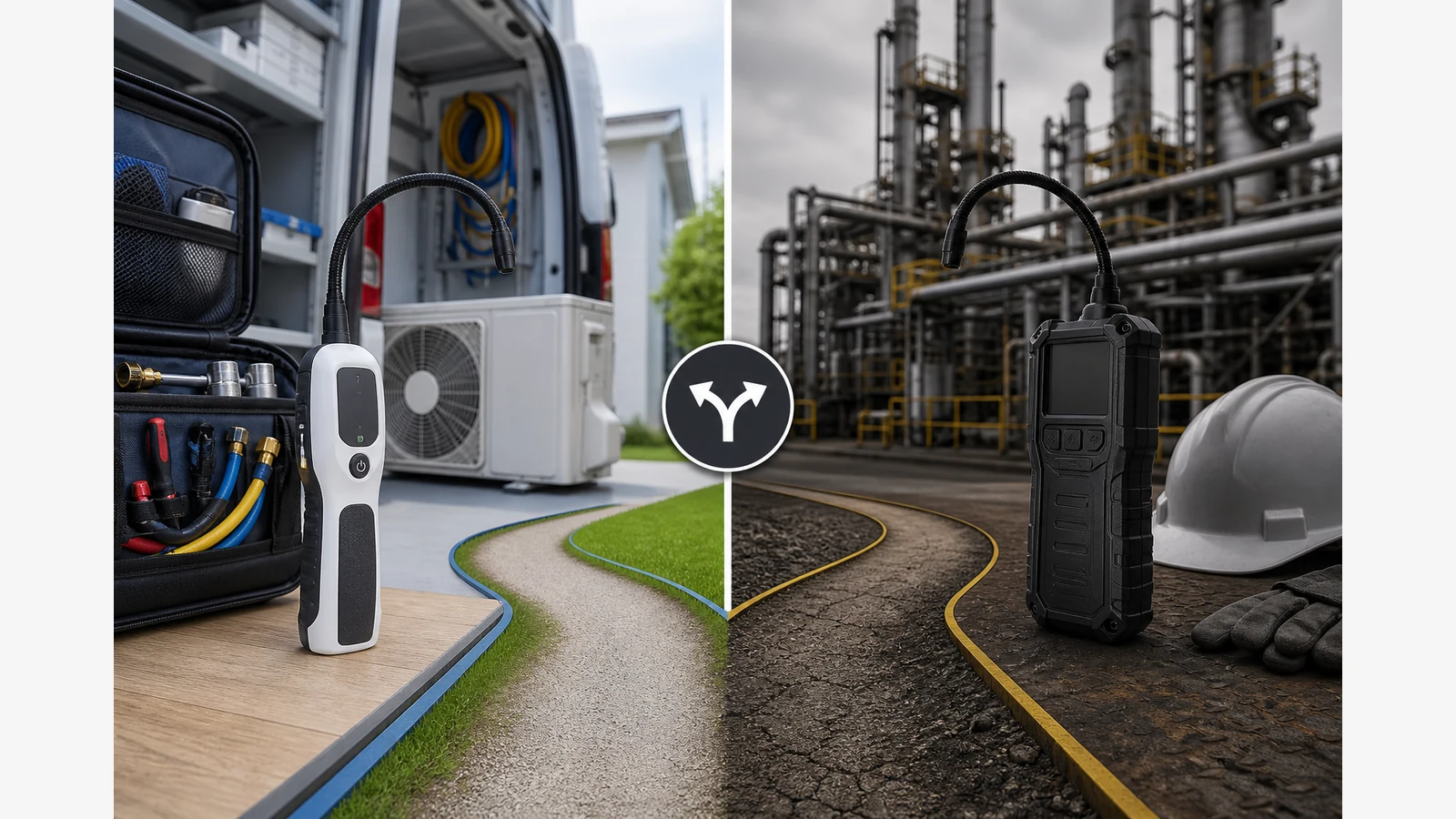
Most UK split and heat-pump A2L service work needs a compatible portable locating sniffer — not an ATEX-rated detector. ATEX-class tools matter when you intentionally work A3 or other combustible-gas hazardous contexts under a site risk assessment. Buying the wrong class wastes money; buying the wrong story creates false confidence.
Decision drivers
| Driver | Lean A2L portable sniffer | Lean ATEX-class kit |
|---|---|---|
| Refrigerant class this week | Mostly A1 / A2L (R410A, R32, R454B splits and heat pumps) | A3 or other intentionally flammable service contexts |
| Site zoning | Ordinary domestic / light commercial call-outs | Zoned hazardous areas per site rules |
| Manufacturer / design literature | Portable locate tool for joints | Explosion-protected equipment specified |
| What the badge means | “A2L compatible” ≈ detects those refrigerants for locate work | ATEX/Ex ≈ hazardous-area protection claims |
What “A2L compatible” does not mean
On a handheld, A2L compatibility usually means the sensor and firmware are intended for mildly flammable refrigerants used on everyday UK heat-pump and split call-outs. It is not an explosion-protection certificate. FETA’s quick-start material frames A2L system design and safety under EN 378 and related standards rather than treating every handheld as hazardous-area certified — see the FETA Quick Start Guide (PDF).
Vendors that sell ATEX-certified heated-diode detectors typically position them for A3 refrigerant contexts, while pointing common A1/A2L service toward non-ATEX locating models. Fieldpiece Europe’s ATEX heated-diode product page is one public example of that split — see the Fieldpiece Europe ATEX heated-diode detector page.
Honest fit for a mid-price A2L sniffer
A mid-price heated-diode A2L sniffer is a sensible van default when your week is R32 / R454B heat pumps and familiar A1 systems, you need probe reach and relative signal feedback, and you are not claiming hazardous-area certification. Escalate to an ATEX-rated kit when the week’s refrigerants, site zoning, or manufacturer instructions put you into combustible-gas hazardous work — after a proper risk assessment, not after a scare headline.
Do not scare-sell ATEX for ordinary domestic R32 splits without context. Do not stick imaginary Ex badges on an A2L service tool.
Classify the week’s refrigerants before buying a second tool
Write down the refrigerants on next week’s board. If they stay A1/A2L locate jobs, standardise the portable sniffer and the scan SOP. If A3 or zoned plant appears, budget a separate explosion-protected path instead of forcing one instrument to tell both stories. For plant-room monitor duties versus handheld locate, keep portable sniffer versus fixed monitor open. For outdoor R32 scan order, use the heat pump outdoor unit leak scan checklist.
To review a UK A2L-oriented heated-diode handheld without ATEX claims, see the Aprvtio advanced leak detector product page.